Wednesday, August 31, 2011

A MYSTERIOUS TRUTH

Ephesians 3:4-6

In reading this, then, you will be able to understand my insight into the mystery of Christ, which was not made known to men in other generations as it has now been revealed by the Spirit to God’s holy apostles and prophets. This mystery is that through the gospel the Gentiles are heirs together with Israel, members together of one body, and sharers together in the promise in Christ Jesus. 

And, from the Message Bible . . .

As you read over what I have written to you, you'll be able to see for yourselves into the mystery of Christ. None of our ancestors understood this. Only in our time has it been made clear by God's Spirit through his holy apostles and prophets of this new order. The mystery is that people who have never heard of God and those who have heard of him all their lives (what I've been calling outsiders and insiders) stand on the same ground before God. They get the same offer, same help, same promises in Christ Jesus. The Message is accessible and welcoming to everyone, across the board. 

We are still in the midst of a lengthy parenthetical statement.  Simply put, as the Ephesians re-read Paul's letter to them, they will be able to make their own judgment about whether the apostle has really grasped the essence of God's secret plan.  It seems that Paul's credibility was always in question because of how he became one of the apostles  Unlike Paul, the other apostles were apostles because they lived with, ate with, spoke with and learned from the Master, Jesus, during His 3 years of ministry on earth.  Paul became an apostle later after Jesus went up into heaven.  He's always having to defend his credibility as one of the apostles equal to Peter and John and the others.  Maybe that's why he's always so long winded and works so hard at driving his point home and explaining his message over and over again.  How about you?  Do you ever feel as if you have to defend yourself, your credibility?  At work?  At home?  As a Christian with some knowledge of scripture?  I bet we can all relate to Paul a bit here.


The Apostle Paul in Prison by Rembrandt

The mystery of Christ was simply this: Christ lives in and among His believers and gives us an unwarranted and unexplainable hope of eternal glory.  This mystery was not made known to the generations before them.  Paul extrapolates this mystery out a little further knowing what we now know.  This mystery extends to Gentiles, too.  Now, in and of itself, this is not news.  Genesis 12:3 says that through Israel ALL nations will be blessed.  We've talked in depth about Israel's important role to the other nations.  It was through Israel that the other nations would know the Living God -- the same as the church's role today.

The big news here is that the old theocracy is superseded by the body of Christ composed of Jews and Gentiles -- equally.  We stand together on the same ground.  The ground is level at the foot of the cross of Jesus.  The Jews were no longer the ones through whom God would speak and lead the nations.  The Church now takes that role.  The Church, as we know, is made up of any and all who believe in Jesus Christ as Lord and Savior.  It knows no distinction between Jew and Gentile, slave and free, rich and poor, married and divorced, etc.  If you believe in Jesus as Savior and confess Him as Lord, you are among those to whom this mystery extends.  The Message is accessible and welcoming to everyone, across the board.

Paul is exhaustive in his attempts to bring this point home -- to make it clear to Jew and Gentile alike -- to you and to me.  As far as his credibility goes, even the great apostle Paul had his insecurities.  Friends, if nothing else, this should make him someone to whom you can relate.

Living into the mystery,
Kerry

Tuesday, August 16, 2011

REACH HIGHER, LIVE BETTER, LOVE MORE FULLY

Ephesians 3:2-3

Surely you have heard about the administration of God’s grace that was given to me for you, that is, the mystery made known to me by revelation, as I have already written briefly. 

Sometimes, many times, I am most grateful for the Message bible and Eugene Peterson's fresh interpretation of God's Holy Word.  It takes what SHOULD be a simple message, made somewhat convoluted by other interpretations (like the NIV, for instance) and makes it just that, simple.  Here it is from the Message:
I take it that you're familiar with the part I was given in God's plan for including everybody. I got the inside story on this from God himself, as I just wrote you in brief.
 Verses 2-13 seem to be parenthetical.  Paul really is the master at this type of writing.  What humors me about this little passage is the phrase "as I have already written briefly."  I would argue that Paul knows how to write on anything "briefly."  His idea of "brief" and my idea of "brief" are two different things.  Chances are, if he was writing books today, he wouldn't have much of a following.  People today would probably say things like, "he's too wordy;" "it takes him too long to get to the point;" "he's too hard to follow."  Although all that may be accurate, the truth is, he is brilliant and altogether humble.  Qualities that don't always mesh together in an individual.


Very few people in scripture can claim to hold the trophy on legalistic righteousness (Philippians 3:6) and then turn around and write a flaming manifesto on the need for God's grace (Galatians) like the apostle Paul.  I've known more than a few people in my life who do not like Paul and have a hard time appreciating his writings.  Not me.  I think his life is fascinating and his writings challenge me.

One of the most intriguing things about Paul is how, at first glance, he comes off as hard-nosed and black and white about everything.  Upon further study of Paul's life and motives and personality, however, you find a man who is not hard-nosed at all.  On the contrary!  He is very tender to those around him and so in love with the One who saved him that day on the road to Damascus that it causes him to speak out relentlessly about God's love and grace.  It's Paul's tenacious personality along with his brilliant intellect that makes him a force to be reckoned with.  And this would be true no matter the group of people that might have laid claim to his loyalties.  It is his humble attitude, humility taught him by the same One who humbles each of us, that allows him and moves him to challenge each one of us to be more than we are right now.  To reach higher and live better and love more fully as we take each breath of life given us by the One who created us.  That's what I hear the Apostle saying to me.


All of that to say, these two verses are not as complicated as they sound.  Paul is simply being conversational.  When you read verses 2-13 like they were in parenthesis, you read it with a bit more understanding.  As he has explained throughout this letter, several times, because he is not "brief," his commission is to the Gentiles and this commission is from God himself.  It's a reminder.  Thank you Mr. Peterson for your simple and fresh approach to God's word.

Reaching higher, living better, loving more fully,
Kerry

Thursday, June 2, 2011

FOR THIS REASON . . .

Ephesians 3:1

For this reason I, Paul, the prisoner of Christ Jesus for the sake of you Gentiles— 

Paul's great desire was for the Church to rise up and continue to grow and build.  Paul has made certain that the Ephesians know and understand ALL THAT GOD HAS DONE to bring it about!  And, we have spent weeks learning this as well!  So, it's for THAT reason . . . so for this reason . . . what?  What is the apostle trying to say here? He doesn't finish his thought.  At least not yet.  "I, Paul," the apostle who can write in "asides" and "digressions" without us ever even realizing it, who so fluently and fluidly writes under the influence of his mad passions and mad skills and mad knowledge of truth . . . doesn't finish this thought until verse 14 where he softly and humbly says, "For this reason . . . I kneel . . ."  We'll have to wait a few weeks to finish his thought. Whatever he is trying to say, it if for this reason: the Church, this mystery wrapped in flesh.  In the meantime, we will sort out all that's in between verses 1 and 14.  (It's kind of like he put a really long thought in parenthesis between 1 and 14.)

St. Paul in Prison by Rembrandt

Paul is a prisoner in Rome.  Paul, however, refuses to regard himself as a victim either of the Jews or of the Roman emperor, rather, he is the prisoner of Christ Jesus.  This statement alone marks him as a true apostle.  It is because of his calling to the Gentiles that the Jews had him thrown in prison.  In Acts 21 we read this account.  Paul arrived in Jerusalem and was immediately warned by fellow Jewish believers that Jews from the province of Asia were in hot pursuit of him, watching for any reason to accuse him of breaking Jewish law.  When they sited Paul in the city with Trophimus, an Ephesian convert, they assumed that Paul had paraded him inside the temple area.  This would be a stretch of an accusation since a) it was forbidden in Jewish law for Gentiles to enter the temple, an act requiring the punishment of death for the gentile who entered; b) Paul was extremely educated in Jewish law and would not have been so careless as to risk the life of Trophimus in such a way; and, c) the law required that Trophimus be punished for entering the temple, not Paul.  They were looking for a reason to imprison Paul -- to stop him from including Gentiles in the promises of God and in the process converting Jews to believers in Jesus Christ as Messiah.

His calling was to the Gentiles but he also loved his fellow Jews.  Paul, a Jew of Jews, zealous for the law, once a Pharisee and persecutor of those who belonged to the Way . . . it is for the sake of the Gentiles that he is imprisoned.  Refusing victim status, no whining or complaining about his circumstances, is a prisoner of Jesus Christ whether he is in chains or walking free -- his status and calling is sure.
. . .circumcised on the eighth day, of the people of Israel, of the tribe of Benjamin, a Hebrew of Hebrews; in regard to the law, a Pharisee; as for zeal, persecuting the church; as for legalistic righteousness, faultless.  But whatever was to my profit I now consider loss for the sake of Christ.  Philippians 3:5-7, NIV

Kneeling,
Kerry

Monday, May 23, 2011

WONDER OF WONDERS!

Ephesians 2:19-22

Consequently, you are no longer foreigners and strangers, but fellow citizens with God’s people and also members of his household, built on the foundation of the apostles and prophets, with Christ Jesus himself as the chief cornerstone. In him the whole building is joined together and rises to become a holy temple in the Lord. And in him you too are being built together to become a dwelling in which God lives by his Spirit. 

Because of a promise God made to Abraham, the Gentiles were on the outside looking in.  God promised Abraham that from his ancestors a great nation would emerge and He would be their God and they would be His people.  The Gentiles were allowed into citizenship in Israel as long as they adhered to circumcision and followed the laws of the Living God -- the laws God gave to Israel.  The requirements for the Gentiles were no different than the requirements of the Jews.  But . . . we've been through all of that.  Here's the good news: we are no longer foreigners and strangers, but fellow citizens with God's people because Jesus made it possible through His death.  In Him we are one with no barrier between us.

The Cornerstone by Richard Tuvey

Paul paints a wonderful picture of architecture, community and family by calling us a household.  The foundation, the mortar being the apostles and prophets.  Typically, Paul attributes the title "foundation" to Jesus, but here he attributes it to the apostles and prophets who were witnesses to the resurrection appearances of Jesus and who preached the good news.  And, also typically, when a New Testament writer refers to "prophets" they are referring to the prophets of old, Isaiah, Jeremiah, Ezekiel, etc., but here Paul is referring to the prophets of a new Israel.  The apostles and prophets who established the church, Paul, Matthew, Mark, Luke, John, Peter, etc. by preaching God's message of salvation through Jesus Christ.  And, Jesus Christ is the chief cornerstone.  In ancient times, "cornerstone" was referred to as the capstone or building stone.  Placed first before all other stones, it covered a right angle joining two walls together and held the whole building together.  Often a royal name was  inscribed on it and in some parts of the world it was considered more important than the foundation.  Paul expounds on this idea and so the purpose behind Paul calling Jesus the chief cornerstone was in the image of being "joined together" into one building, one household, by one chief cornerstone.

So with that image in mind, Paul takes a jab at the Ephesian gods of the day by claiming that this building of God rises to become a holy temple.  Now, "temple" is surely a term that the Jews understood since the days of Moses, but Ephesus was steeped in a cult religion that worshiped the goddess Artemis whose temple was so magnificent that it was one of the seven wonders of the ancient world. 

Ruins of the ancient temple

The new Church rises, and continues to rise, continues to build.  The process of joining together the two families into one household began with Jesus Christ, the chief cornerstone, and it continues to this day.  Churches work together to put differences aside, individuals work to put differences behind them.  This continual "building" has centuries of proof behind it that it cannot be destroyed.  It will not be left in ruins like the cult temples of old.  It is the dwelling of the Living God made possible by His Spirit.  The Church is truly the greatest wonder of them all!

Rising up!
Kerry

Wednesday, May 11, 2011

ONE NEW HUMANITY

Ephesians 2:14-18

For he himself is our peace, who has made the two groups one and has destroyed the barrier, the dividing wall of hostility, by setting aside in his flesh the law with its commands and regulations. His purpose was to create in himself one new humanity out of the two, thus making peace, and in one body to reconcile both of them to God through the cross, by which he put to death their hostility. He came and preached peace to you who were far away and peace to those who were near. For through him we both have access to the Father by one Spirit.

Rainbow in My Hand by Gwen Meharg
God never intended for a great barrier of hostility to exist between the Jews and the other nations.  God only intended for the Jews to be set apart and used for God's glory with the result being that other peoples and nations would see the difference between the Living God and the false gods they were worshiping.  He wanted the other nations to see that He was a God of grace and mercy and love, that He created them and would therefore care and provide for them, and that He NEVER demanded the sacrifice of their children to appease His anger.  But, instead of the nations always seeing that through the Jews relationship with the Living God, the Jews shut them out and soon it developed into an "us" against "them" mentality.  But, to be fair, if I was part of a nation that God used to wipe out entire people groups, I might gain that mentality myself.  It would be easy to get confused in such a situation.  What's important to remember here is that God didn't wage war on people groups to prove the superiority of the Israelites, He did it to prove His own superiority as the God of gods, the Living God over all the other gods in a world where many, many false gods were being heavily worshiped and to whom children were being sacrificed. (Romans 1:20-25 and Jeremiah 7:31-32 and Leviticus 20:2, Deuteronomy 9:4-5)

Painting of Nineveh capital of Ashur ca 700 BC
The book of Jonah is such a great example of God's great mercy and grace to the other nations. When God sent Jonah to warn the Ninevites that judgment and wrath were coming to them, Jonah ran away.  He would have sooner drowned in the sea than give the Ninevites opportunity to turn to God.  The Ninevites were part of "them" -- they were Gentiles and enemies of Israel.  Jonah did finally give them God's message, albeit very begrudgingly, the Ninevites repented and turned to God for mercy.  Guess what God did?  He extended mercy to them and told Jonah,
"And should I not have concern for the great city of Nineveh, in which there are more than a hundred and twenty thousand people who cannot tell their right hand from their left—and also many animals?" (Jonah 4:11, NIV)
Any move towards God and God reaches out His long arm of mercy and grace, rescues those that were lost and far away and brings them near where they find peace.

God had commanded the Jews to care for the the foreigner and alien.  Any foreigner or alien who became one of their servants or who sought refuge with the Israelites was to be included as one of the Israelites:
"When a foreigner resides among you in your land, do not mistreat them. The foreigner residing among you must be treated as your native-born. Love them as yourself, for you were foreigners in Egypt. I am the LORD your God." Leviticus 19:33-34, NIV
They were to be allowed to glean from their harvest fields and the Jews were commanded to leave what was dropped and to leave the corners of their fields alone so the poor and hungry, no matter who they were, could eat.
"When you reap the harvest of your land, do not reap to the very edges of your field or gather the gleanings of your harvest. Do not go over your vineyard a second time or pick up the grapes that have fallen. Leave them for the poor and the foreigner. I am the LORD your God." Leviticus 19:9-10
There is no place in God's economy or law for "us" and "them."


Paul points out that in Christ, through His sacrifice, there is no dividing line.  The Jews no longer have to follow all of the rules and regulations that kept them separate from the other nations.  The Jews are no longer the only ones through whom God speaks and shows Himself mighty.  We see all of that now as one body of believers, one church through which Jesus Christ is worshiped as King and Savior and through whom we all have access to the Living God -- Jew and Gentile alike.  He brought peace to all the nations -- whether we live into it or not.  Christ and no one else has solved the problem of our relationship with God and with each other.

Remember, Paul's objective in the letter to the Ephesians is to take them higher and help them rise above the day to day sins that beset each of us, to root them deeper into the truth of God's word and to widen their scope of understanding about who God is and His purpose for humankind.  He's telling them and us, "Enough with the walls and barriers you put up between you and them.  In Christ, those walls and barriers DO NOT exist.  Out of the two worlds, Jew and Gentile, Christ has made a new creation.  One that is at peace.  One that strives to love each other.  One that no longer emphasizes the differences, but embraces the unity of Christ's sacrifice for all."  We are one in Christ.

In unity,
Kerry

Wednesday, May 4, 2011

JEW AND GENTILE: DIFFERENT AND THE SAME

Ephesians 2:11-13

Therefore, remember that formerly you who are Gentiles by birth and called “uncircumcised” by those who call themselves “the circumcision” (which is done in the body by human hands)— remember that at that time you were separate from Christ, excluded from citizenship in Israel and foreigners to the covenants of the promise, without hope and without God in the world. But now in Christ Jesus you who once were far away have been brought near by the blood of Christ. 

It's easy to read these verses and gather the impression that Paul is pointing out the low class of the Gentiles and how it's only by God's good graces that they would be considered for inclusion into God's kingdom with the Jews.  And, all of that is true, only not in the sense that you might think.

The Gentiles, those not born of Jewish descent, you and me, were simply that -- not born of Jewish descent.  That's the only real difference between us as human beings . . . different from the Jews, that is.  Once again Paul is drawing the distinction that because that is the only thing that separates, there is really nothing that separates us.  In Bible times, circumcision was the outward sign that set you apart as a member of the Jewish race of people.  God had Abraham circumcise himself and his entire household, sons, grandsons, servants, slaves and foreigners and aliens that were among them as a sign of the covenant between him and God.  The covenant was this: for Abraham's part, the Lord alone would be his God, whom he would trust and serve; for God's part, He would be with Abraham and his descendants and make them a great nation because of Abraham's faith and that He would be with them and be their God. (Genesis 17:1-14)

As time went on, the Jews used the term "uncircumcised" in a very contemptuous way, believing and pointing out the Gentiles lowly state of their soul.  Paul, on the other hand, is simply using the term here to make his point (hence the quotation marks) that "circumcised" or "uncircumcised" doesn't matter because circumcision is only something that is done to the flesh . . . by human hands.  What matters is if our hearts, not our bodies, bear the mark of the covenant promise . . . of the Eternal One who brings us near to Him and gives us citizenship in His kingdom. 
Circumcise your hearts, therefore, and do not be stiff-necked any longer. For the LORD your God is God of gods and Lord of lords, the great God, mighty and awesome, who shows no partiality and accepts no bribes. He defends the cause of the fatherless and the widow, and loves the foreigner residing among you, giving them food and clothing. And you are to love those who are foreigners, for you yourselves were foreigners in Egypt. Deuteronomy 10:16-19, NIV
A person is not a Jew who is one only outwardly, nor is circumcision merely outward and physical. No, a person is a Jew who is one inwardly; and circumcision is circumcision of the heart, by the Spirit, not by the written code. Such a person’s praise is not from other people, but from God. Romans 2:28-29, NIV
It's true, there was definitely a distinction between Jew and Gentile, but not in a spiritual sense.  The distinction was made through Abraham.  Because Abraham had faith in God, God chose him to bring the blessings of God to the rest of the world, to the foreigners and aliens . . . those outside of Abraham's descendants.  Abraham's descendants became the Jewish nation.  God chose Abraham's descendants to do a special work. 

What advantage, then, is there in being a Jew, or what value is there in circumcision? Much in every way! First of all, the Jews have been entrusted with the very words of God.  Romans 3:1-2, NIV
. . . the people of Israel. Theirs is the adoption to sonship; theirs the divine glory, the covenants, the receiving of the law, the temple worship and the promises. Theirs are the patriarchs, and from them is traced the human ancestry of the Messiah, who is God over all, forever praised! AmenRomans 9:4-5, NIV
The Jews were given the special tasks of bringing God's word through history, they were the picture of adoption into God's family and they enjoyed the glory of God's presence (like with the pillar of cloud by day and the pillar of fire by night as in Exodus 13:21-22).  God made his covenant with them to bless all the peoples of the earth through them.  In the receiving of the law He gave to them the standard of living for all people, and He didn't just speak the law to them, He wrote it on stone tablets.  These tablets became prize possessions to the Jews symbolizing their relationship with God.  He gave to them the standard for worship and the precious promise of a Savior.  And, not at all least of these, is the patriarchs.  God was pleased to be the Father of Abraham, Isaac and Jacob and it was through these faithful few that we trace the human ancestry of Jesus.
So, yes.  There was a distinction between being Jew and being Gentile in terms of responsibility to the human race.  BUT, that in no way means that there is a distinction between Jew and Gentile in terms of the spiritual condition of our souls.  The Jews were chosen for the task of showing the rest of the world, the foreigner and the alien, the non-Jew, who this living God was, but they still had to circumcise their heart.  Being chosen by God to do this work did not negate their own need for God's grace and mercy.  They still had to come to God the same way the Gentiles had to, in faith . . . like Abraham, Isaac and Jacob.  Being a Jew did not gain them access into God's presence.  Faith did.

These verses go on to tell us that the Gentile was separated from Christ and excluded from citizenship in Israel, going through life unaware of the covenants and promises and without hope of really knowing the God who created them.  Again, that was Israel's job.  They were to love the foreigner and alien and, in the Old Testament, if the foreigner and alien were willing to be circumcised, then they were to be counted as part of Israel.  It's no different now, New Testament life.  Those outside of the knowledge of salvation, those who haven't yet believed, go through this life unaware of God's love and hope and knowledge of the God who loves them.  Paul tells us that now, through Christ's work on the cross, through His blood, those outside do not need to remain outside, unaware.  The work of Christ is for us all.  We no longer depend on Israel to be God's messengers.  They did their job.  We have God's word and it tells us everything we need to know about who we are, who God is, how we should live, whom we should love, how much God loves us, the message of the cross and blood that leads us to life.

The message is this:  there is no difference between us or anyone else -- Jew, European, African, Indian, Middle Easterner, or American.  In God's economy no one is any lower class than the other.  And, God is not begrudgingly allowing us the opportunity to gain eternal life with Him.  He is GLADLY holding out the promises to you and to me!  He has gone to the most extreme lengths to insure our salvation.  His grace is extravagant and it lavishly ushers those on the outside in as soon as they desire it.  We all must come to the same place the same way: to the cross in faith (like Abraham, Isaac and Jacob) believing that through Jesus' blood we are brought near to the throne of God, the Ruler of all who live, who will live and have ever lived.
In Christ's family there can be no division into Jew and non-Jew, slave and free, male and female. Among us you are all equal. That is, we are all in a common relationship with Jesus Christ. Also, since you are Christ's family, then you are Abraham's famous "descendant," heirs according to the covenant promises.  Galatians 3:28-29, MSG

In faith,
Kerry

Tuesday, April 19, 2011

A GOOD LIFE

Ephesians 2:10

For we are God’s handiwork, created in Christ Jesus to do good works, which God prepared in advance for us to do. 

This verse shows us that one of the things that salvation is intended for is to produce the good works that bear out its reality, its truth.  Let's be clear here.  "Works" plays NO PART in securing salvation.  It is, however, how we prove our faith. 
What good is it, my brothers and sisters, if someone claims to have faith but has no deeds? Can such faith save them? Suppose a brother or a sister is without clothes and daily food. If one of you says to them, “Go in peace; keep warm and well fed,” but does nothing about their physical needs, what good is it? In the same way, faith by itself, if it is not accompanied by action, is dead. James 2:14-17, NIV
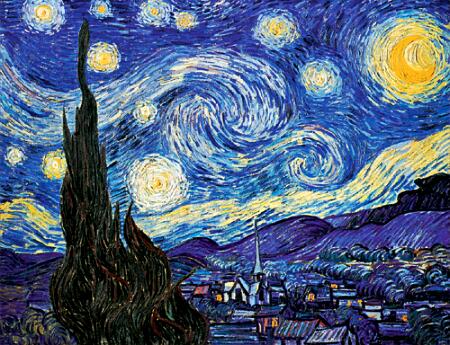
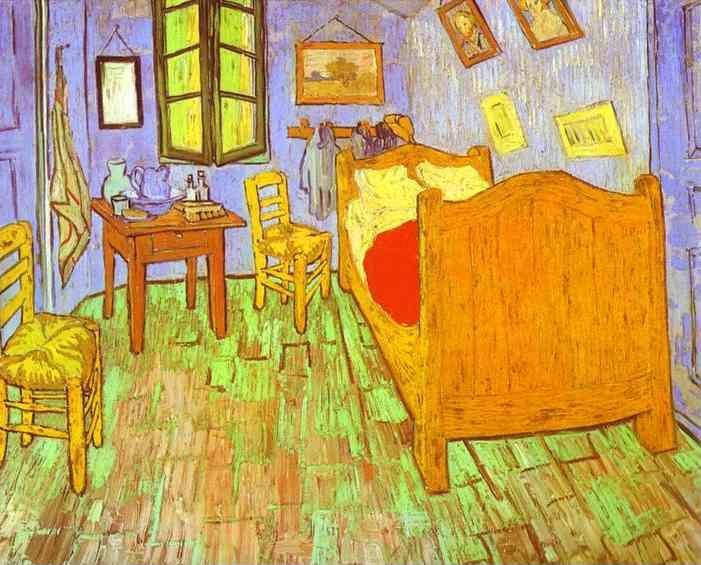
You are God's handiwork.  Handiwork means to have the characteristic quality of a particular maker.  It's like when you look at a Van Gogh painting, you can tell it's a Van Gogh.  It has that distinctive look and feel to it.


YOU are God's handiwork!  You have the touch of the Maker all over you!  And, what's more, the good works you are to do, the good life you were meant to live, were created in advance for you to do!  Let me try to explain.  In Genesis 1:26 it says this:

"Then God said, 'Let us make man in our image . . .'" 

The "us" and "our" in that verse clearly indicate that God, the Creator-King, is not alone.  The idea of the Trinity is introduced for the first time here and God the Father, God the Son and God the Holy Spirit are actively involved in the work of creation together.  In John 1:1-3, the apostle is talking about "the Word," referring to Jesus, as being with God in the beginning and that "the Word" was God and that

"through him all things were made; without him nothing was made that has been made." 

Jesus was with God in the beginning, active in creation and is, in fact, God.  And, YOU, dear Believer, were created by Jesus himself with the idea that you would put your faith in Him on display by the good effort you put forth at living the life He gave you.  Better put: the good life, or the life of goodness, that having faith in Christ produces was prepared for Believers from the beginning.  It was meant for you from the beginning of time to live a good life, or to live a life of goodness.  And, that life of goodness will demonstrate the reality of our salvation.  Furthermore, you cannot boast about this life of goodness because even IT has its source in God -- the One who made it possible.


For goodness sake,
Kerry